Why Needle Quality Matters
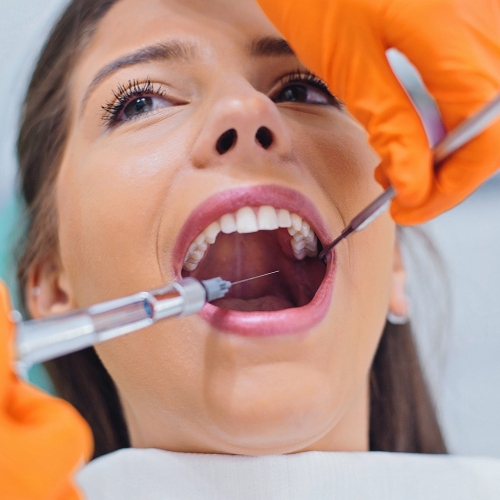
For many patients, the injection is the most anxiety-provoking part of a dental appointment. Research has shown that needle design characteristics—including bevel geometry, sharpness, surface finish, and manufacturing quality—can influence penetration force, tissue trauma, and perceived pain during injection.(1) High-quality needles generally require less insertion force, resulting in smoother tissue penetration, improved patient comfort, and more rapid healing time.(2) Furthermore, consistent manufacturing standards help ensure predictable performance and reduce the risk of needle defects or deformation.(2)
Stainless Steel Quality and Structural Integrity
Dental needles are typically manufactured from medical-grade stainless steel. The quality of the alloy and manufacturing process influences flexibility, resistance to corrosion, and resistance to breakage.(3) Inferior materials or manufacturing inconsistencies can lead to increased needle deflection, deformation of the bevel, or compromised durability.
Studies examining the physical and mechanical characteristics of dental needles have demonstrated notable differences between manufacturers in terms of dimensions, bevel quality, and structural consistency.(3,4,5) Maintaining high manufacturing standards is therefore essential for achieving reliable clinical performance and minimizing complications during local anaesthetic administration.
Sharpness and Bevel Design
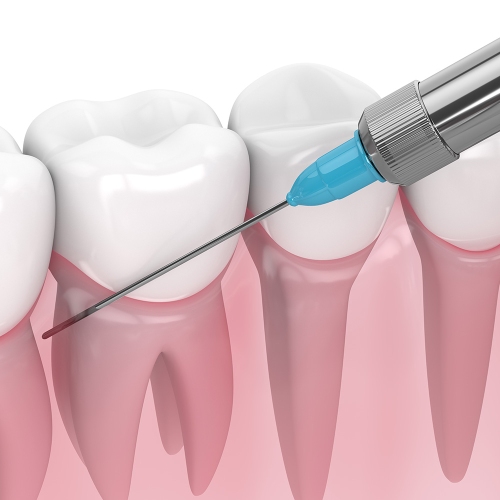
The needle tip is arguably the most important determinant of insertion comfort. A precisely manufactured, sharp bevel reduces tissue resistance and allows smoother penetration. Multi-bevel designs have become common because they facilitate tissue entry while reducing tissue trauma. They make injections easier for dental professionals and more comfortable for patients compared to traditional designs because:(6,7)
- They require less penetration force.
- They are more accurate for needle placement and reduce deflection.
- They distribute cutting forces across multiple points, which reduces tissue tearing and deformation during insertion.
- They reduce the risk of needle deformation.
Inibsa offers a line-up of high-quality triple-bevel purpose-designed dental needles engineered for precision, patient comfort, and clinical safety. Inibsa’s signature Monoprotect® dental needles (Figure 1) feature a triple-bevel design specifically intended to facilitate tissue penetration and reduce tissue injury during anaesthetic administration. The design contributes to a smoother injection experience for both the patient and the clinician.

Source: Inibsa.com (This product complies with the medical device regulation.)
Silicone Coating and Injection Comfort
Friction between the needle surface and soft tissues contributes to insertion resistance and patient discomfort. To address this, many premium dental needles incorporate a silicone coating that reduces friction during penetration.(8) Silicone-coated needles require less insertion force and provide a smoother passage through tissues. This helps reduce discomfort during needle insertion while improving clinician control.
Monoprotect® Inibsa and Monoprotect® Inibsa Plus needles feature a stainless steel cannula with a silicone-coated tip designed to reduce penetration effort and enhance patient comfort during injection procedures.
Manufacturing Standards and Safety
Beyond comfort and performance, manufacturing quality plays a critical role in infection prevention and patient safety.(1,3,4,5) Dental needles should be sterile, single-use devices produced under rigorous quality-control standards.
Inibsa’s Monoprotect® needles incorporate several safety-focused features, including sterility assurance through a welded connection between the protective cap and needle protector. The needles are also latex-free, reducing the risk of allergic reactions. Additional features such as color coding, bevel indicators, and printed batch and expiry information support efficient and safe clinical workflows.
More recently, Monoprotect® Inibsa Plus needles have expanded the product range, offering enlarged-bore technology designed to facilitate smoother anaesthetic flow while maintaining the same emphasis on safety, quality, and patient comfort.
Take-Home Message
Dental needle quality should not be viewed as a minor consumable consideration. The choice of needle can directly influence patient comfort, injection accuracy, clinician confidence, and procedural safety. Features such as high-quality stainless steel, precision-engineered bevels, silicone coatings, and stringent manufacturing standards contribute to a more predictable and comfortable anaesthetic experience.
As patient expectations continue to rise, selecting premium-quality needles such as Monoprotect® Inibsa and Monoprotect® Inibsa Plus can help clinicians deliver safe, efficient, and patient-centered dental care.
References
- McPherson JS, Dixon SA, Townsend R, et al. Effect of needle design on pain from dental local anesthetic injections. Anesth Prog. 2015;62(1):2-7. doi:10.2344/0003-3006-62.1.2
- Rani M, Mishra V, Singh O, Shankar A, Kumar R. Characterisation of needle edge quality using diffraction pattern. Measurement. 2022;198:111377. doi:10.1016/j.measurement.2022.111377
- Byrne M, Aly A. The surgical needle. Aesthet Surg J. 2019;39(Suppl 2):S73–S77. doi:10.1093/asj/sjz035
- Monteiro MAO, Antunes ANDG, Basting RT. Physical, chemical, mechanical, and micromorphological characterization of dental needles. J Dent Anesth Pain Med. 2021;21(2):139-153. doi:10.17245/jdapm.2021.21.2.139
- Imai H, Tetsumoto A, Yamada H, et al. Impact of different manufacturers and gauge sizes on the performance of backflush needle. Sci Rep. 2020;10(1):21452. doi:10.1038/s41598-020-78668-6
- Li ADR, Plott J, Chen L, et al. Needle deflection and tissue sampling length in needle biopsy. J Mech Behav Biomed Mater. 2020;104:103632. doi:10.1016/j.jmbbm.2020.103632
- Li ADR, Liu Y, Plott J, et al. Multi-bevel needle design enabling accurate insertion in biopsy for cancer diagnosis. IEEE Trans Biomed Eng. 2021;68(5):1477-1486. doi:10.1109/TBME.2021.3054922
- Muro-Fraguas A, Sainz-García R, Múgica-Vidal E, et al. Low-friction coatings on medical needles through atmospheric-pressure plasma-polymerization technology. Plasma Processes Polym. 2023;20:e2200174. doi:10.1002/ppap.202200174